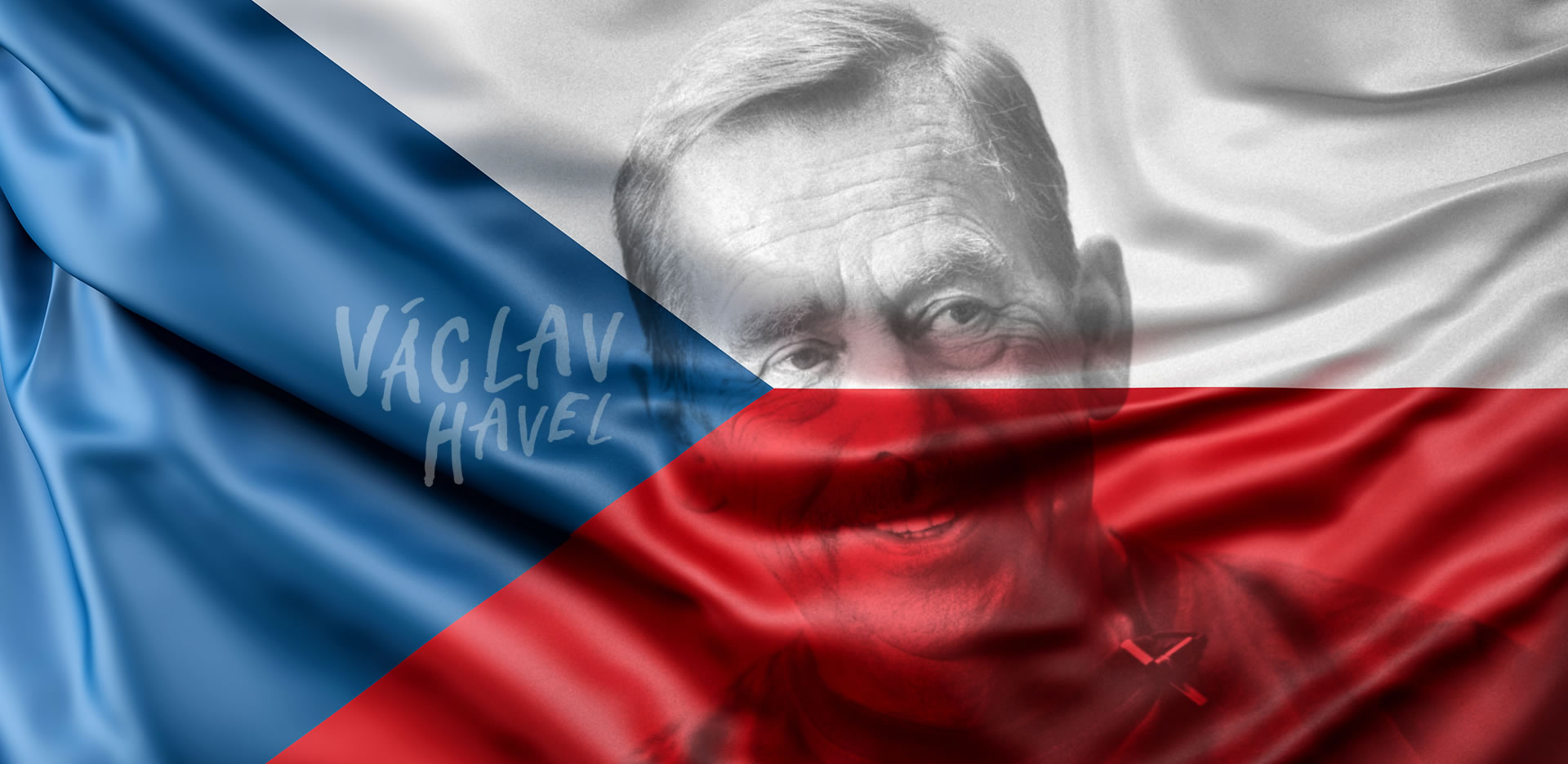
You also can be a part of it!
In today’s global context, the reflections of a figure of Václav Havel’s intellectual stature are particularly missed, given his commitment to the European Union project, multilateralism and human rights, and his advocacy of international democratic solidarity.
Nevertheless, he remains present, as evidenced by Mark Carney’s reference to him at the World Economic Forum in Davos, on January 20 of this year. And, of course, by his fellow countrymen in the Czech Republic on October 5, on the occasion of the 90th anniversary of his birth. A survey by the STEM Agency, published by Radio Prague International, indicates that 76% of the Czech population holds a positive view of former president Václav Havel.
Beyond his home country, his legacy also continues to inspire human rights activists and organizations. For instance, throughout 2026, CADAL has been organizing screenings of documentaries about Havel, directed by Peter Jancarek, that encapsulate the ideas and the leadership of the first president of the Czech Republic, who passed away on December 18, 2011.
In “Václav Havel, Prague Castle”, the documentary recalls his first months in power following the start of the Velvet Revolution on November 17, 1989, an event that brought an end to more than three decades of communist dictatorship. In a short span of time, Havel visited Germany, the United States, and the then Soviet Union. In Havel’s words, “it was clear that I had to travel to different countries to let them know that we had changed, that we wanted to become a democratic and independent country”.
His speech before the United States Congress remains one of his most memorable. On that occasion, he said: “I often hear the question: How can the United States of America help us today? My answer is as paradoxical as my entire life has been: They can help us above all by helping the Soviet Union on its irreversible, yet immensely complicated, path towards democracy.”
Just two months into his presidency, he became the first head of state to officially invite the Dalai Lama, the Tibetan spiritual leader living in exile in India. Then, for the first time, a Pope —John Paul II— visited Prague, in a predominantly atheist country.
As President of the Czech Republic, Havel visited Buenos Aires on September 27, 1996. During this visit, he gave a lecture in which he warned: “I see a considerable number of threats to civilization and dangers surrounding us... Communism collapsed, but some of those elements of crisis in today’s world have not disappeared.” He added, as new and concerning examples, “the rise of nationalism, chauvinism and xenophobia, among others”.
Because he was a dissident under communism and the author of the famous book cited by Carney at Davos, “The power of the powerless”, he is regarded as a reference figure by some right-wing groups. However, Havel’s political beliefs were liberal/progressive center, and can be summarized in one of his first speeches: “I dream of an independent, free, democratic and prosperous republic that is also socially just. In short, a humane republic that serves its citizens and thereby gives them the opportunity to serve it in return”. For libertarians, Havel would be a socialist.