You also can be a part of it!
August 23 marks the anniversary of the day in 1939 when the Molotov-Ribbentrop Pact was signed, under which the Soviet Union and National Socialist Germany divided Eastern Europe between them. In this way, both totalitarian regimes committed not to attack one another or to ally with the other's enemies for a period of ten years.
The Molotov-Ribbentrop Pact included a secret additional protocol through which the parties defined their spheres of influence in Eastern Europe, which included the division of Poland, the western part for Germany and the eastern part for the Soviets, and control over the Baltic states (Finland, Estonia, Latvia, and Lithuania) as part of the Soviet sphere of influence.
A little more than a week after the pact was signed between the foreign ministers of the communist regime and Nazism, on September 1, 1939, Adolf Hitler launched the invasion of Poland, marking the start of the Second World War. The Pact lasted until June 1941, when Nazi Germany began its invasion of the Soviet Union.
During the Nazi occupation of Poland, one of the episodes that reflects the cruelty of both totalitarian regimes took place: the Katyn massacre. Some twenty-two thousand Polish citizens, mainly military officers, police officers, intellectuals, and prisoners of war, who fled the Nazis toward the side later occupied by the Soviets, were executed by the latter on the direct order of Joseph Stalin. It was not until April 1990, when Mikhail Gorbachev governed the USSR, that Stalin's government's responsibility for this massacre was finally acknowledged. The tragedy was portrayed in the film “Katyn” (2007), directed by the celebrated Polish filmmaker Andrzej Wajda.
The Baltic countries, which like Poland were caught between the barbarity of both totalitarian regimes, also suffered terrible massacres. In Lithuania, the Nazis were responsible for the Ponary massacre, and the Soviets for the Rainiai massacre. In Latvia, the Nazis wiped out most of the Jewish population, the worst episode being the Rumbula massacre, while the Soviets carried out summary executions of intellectuals, Latvian army officers, and dissidents before withdrawing in 1941, leaving mass graves in places such as Riga Central Prison. In Estonia, the Tartu massacre took place, in which the Soviets executed thousands of local civilians suspected of disloyalty to communism, while the Klooga camp massacre, in September 1944, was perpetrated by the Nazis in the face of the advancing Soviet army, systematically executing more than two thousand prisoners in a single day and burning the bodies on wooden pyres in an attempt to conceal the crime.
Fifty years after the signing of the Ribbentrop-Molotov Pact, a historic peaceful political demonstration took place, known as the “Baltic Way,” which brought together approximately two million people who joined hands to form an unbroken human chain more than 600 kilometers long, crossing Estonia, Latvia, and Lithuania, with the aim of denouncing to the world the secret protocol of that pact, through which Nazi Germany and the Soviet Union had illegally divided up Eastern Europe, enabling the Soviet occupation of the three Baltic nations.
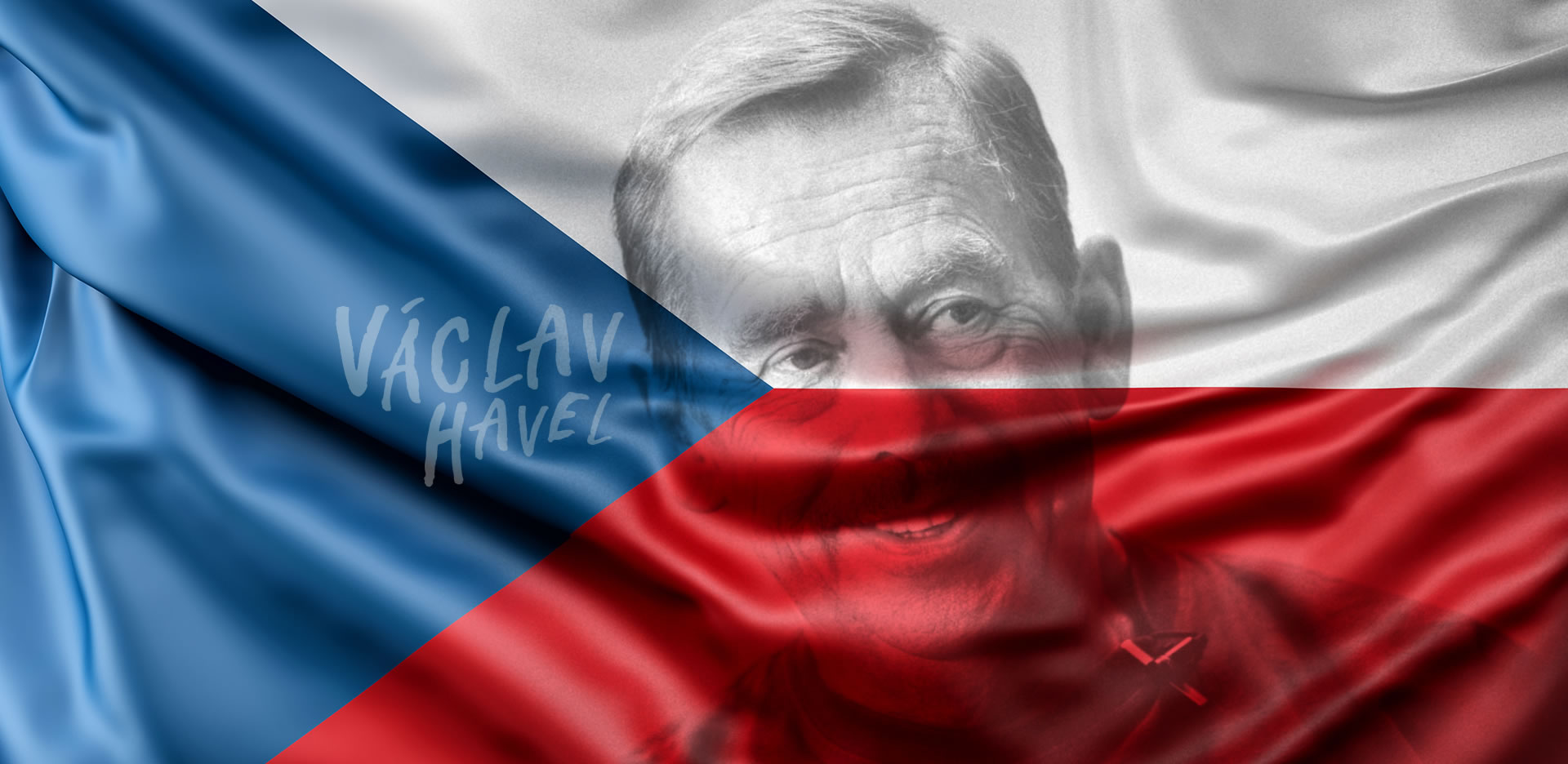
On the initiative of Václav Havel and other European politicians and human rights activists, the European Parliament officially adopted the European Day of Remembrance for Victims of Stalinism and Nazism on April 2, 2009. For the former President of the European Parliament, the Pole Jerzy Buzek, it represented “the collusion of the two worst forms of totalitarianism in the history of humanity.”
In July 2009, through the Vilnius Declaration, the more than 50 member states of the Organization for Security and Co-operation in Europe endorsed establishing this day of remembrance at the international level. For its part, on November 30, 2009, the Parliament of Canada unanimously voted to adopt this date under the name Black Ribbon Day, and the United States did the same.
The Autonomous City of Buenos Aires is the only Latin American case to have formally declared August 23 as the Day in Remembrance of the Victims of Totalitarianism, after the city's Legislature passed Law 5608 in 2015, authored by legislators Cecilia de la Torre (1962-2016) and Francisco Quintana, who supported this initiative promoted by CADAL.
Since 2023, with the creation of the Graciela Fernández Meijide Award for the Defense of Human Rights, CADAL has presented this recognition every August 23 as part of its annual conference on Memory, Human Rights, and Solidarity on the Day in Remembrance of the Victims of Totalitarianism. This August 23, 2026, the Graciela Fernández Meijide Award will recognize five political prisoners who are victims of totalitarianism: Anacleto Micha Ndong (Equatorial Guinea), Yalkun Rozi (China), and Kim Jung-Wook, Choi Chun-Gil, and Kim Kook-Kie (North Korea).
Remembering August 23 and honoring on that day the courage of those who bear the cost of peacefully defying dictatorships is an exercise in memory, international democratic solidarity, and recognition.