You also can be a part of it!
On 11 November 2025, Libya’s fourth Universal Periodic Review (UPR) was conducted at the UN Human Rights Council. The UPR is a peer-review mechanism to which all UN Member States are subjected approximately every 4.5 years, which aims to assess the progress and setbacks in their human rights policies and issue recommendations on how to improve the situation. To this end, three reports are prepared in advance: one by the State under review, another by the Office of the United Nations High Commissioner for Human Rights, and a third by civil society and other stakeholders. On the basis of these three reports, the State under review then receives recommendations formulated by UN Member States that choose to participate in the UPR’s interactive dialogue. In Libya’s case, this dialogue involved the participation of 100 States, whose recommendations the Libyan authorities will have to address in the coming months.
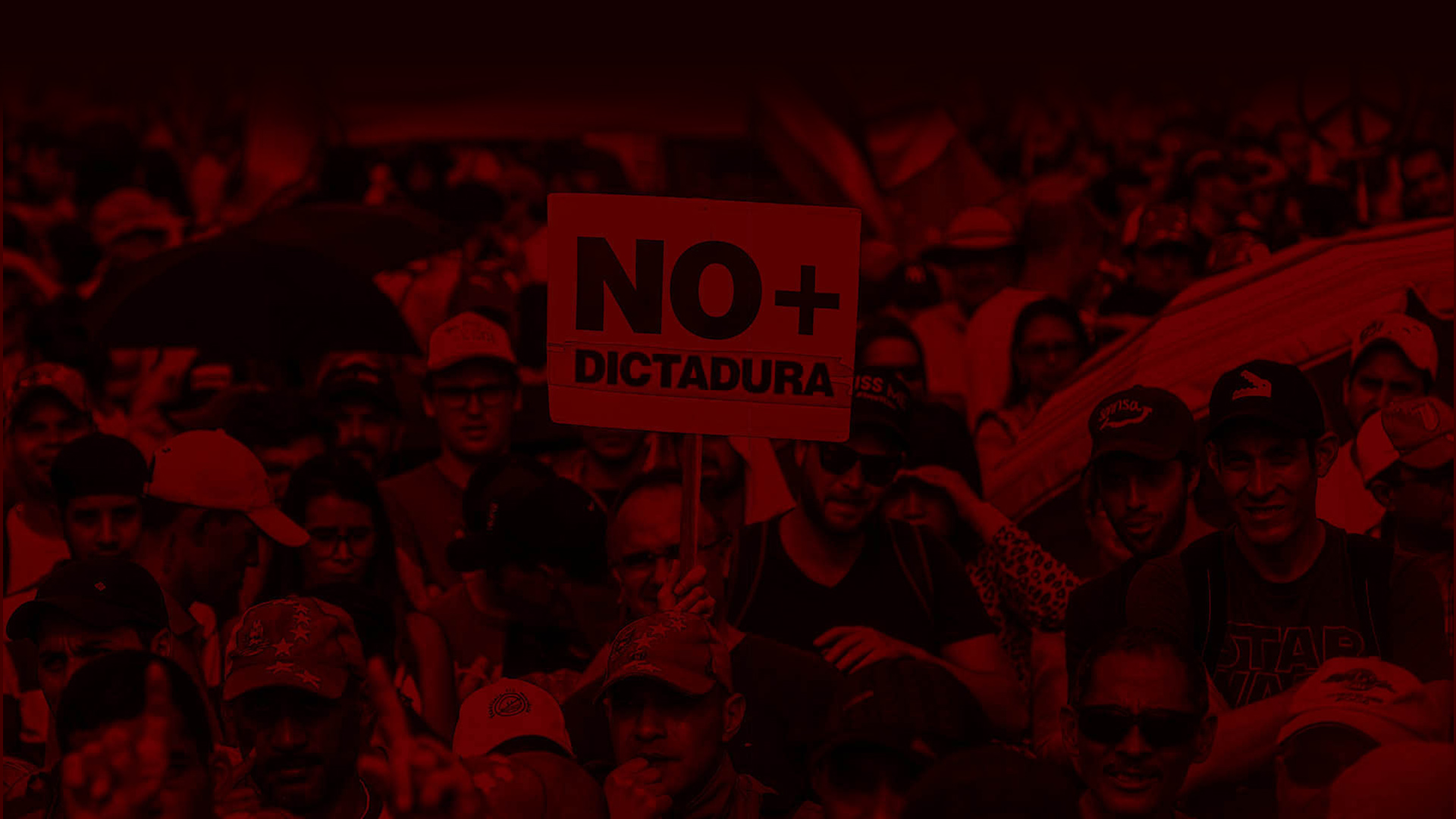
In February 2011, mass protests against dictator Muammar Gaddafi, who had ruled the country for decades, marked the beginning of the so-called “Arab Spring” in Libya. Far from the initial hopes of genuine democratization, however, Libya today is a deeply divided, politically unstable country devastated by two civil wars. The power vacuum left after Gaddafi’s death in 2011 rendered the country vulnerable to competition among various groups with differing ideological agendas and (geo)political interests, meaning that a new political and state order has yet to be defined, even nearly 15 years after the revolution. The UN-mediated peace agreement of 2021 led to the emergence of the Government of National Unity, recognized by the UN as Libya’s legitimate government; however, its effective control is limited to the western part of the country and parts of the south. The east, by contrast, is administered from Benghazi by the Government of National Stability, allied with the Libyan Arab Armed Forces, which exercise military control over the south of the country. These tensions and political fragmentation shape a Libyan context marked by persistent levels of violence and instability.
Against this political backdrop, Libyan civil society—an active protagonist of the 2011 revolution—has been sidelined from political life and faces severe restrictions on civic space and fundamental rights. According to a Human Rights Watch report published in January 2025, authorities in both the eastern and western parts of the country adopted laws that harshly repress organized civil society activity, including extreme sanctions such as the death penalty for establishing “illegal associations.” As a result, human rights activists who remain in Libya self-censor, scale back their activities, or carry them out in secret, while others choose exile. This effectively prevents civil society from playing an active role in building a unified State, drafting a constitution, pursuing transitional justice, and advancing democratic transformation. During Libya’s UPR, at least 20 delegations put forward recommendations to guarantee the free operation of civil society, protect freedoms of expression, association and assembly, and safeguard human rights. These included Australia, Austria, Canada, the Czech Republic, Colombia, Cyprus, Denmark, Estonia, France, Germany, the Holy See, Ireland, Italy, Jordan, Mexico, Poland, South Korea, Spain, Switzerland and Uruguay.
In preparation for the review of Libya’s human rights situation under the UPR, information compiled by the Office of the United Nations High Commissioner for Human Rights highlights that Libya continues to resort to arbitrary detention and physical ill-treatment during deprivation of liberty. The UN team in Libya also expressed concern about deaths in custody and enforced disappearances. Accordingly, it recommended incorporating the provisions of the Convention against Torture into domestic legislation, criminalizing enforced disappearance and establishing mechanisms to prevent and investigate it, as well as prosecuting and punishing those responsible for war crimes and other human rights violations. At least 42 delegations recommended that Libya adopt measures to strengthen protection of the right to life, including action against torture, enforced disappearance, arbitrary detention and human trafficking, as well as general improvements in detention conditions.
The Independent Fact-Finding Mission on Libya concluded in its final report of March 2023 that refugees, asylum seekers and migrants are victims of crimes against humanity in the country, and that “acts of murder, enforced disappearance, torture, enslavement, sexual violence, rape and other inhumane acts are committed in connection with their arbitrary detention”. It further found that women face systematic discrimination in Libya, that perpetrators of gender-based violence enjoy impunity, that women lose civil rights when marrying foreign nationals, and that there is no comprehensive law to combat gender-based violence. At least 22 delegations issued recommendations related to the rights of migrants, including Nigeria, Norway, Poland, Sierra Leone, Uganda, the United Kingdom, Austria, Colombia, Ecuador, Finland, France, Germany and the Holy See. In addition, at least 57 countries recommended that Libya adopt measures to combat discrimination and gender-based violence, among them Mexico, the Philippines, Spain, Thailand, the United Kingdom, Australia, Belgium, Brazil, Chile, Colombia, the Czech Republic, Denmark, Ecuador, Greece, Ireland, Iceland, Japan, Mauritania and Uganda.
Argentina did not submit any recommendations to Libya, following the decision of President Javier Milei’s government to withdraw its Human Rights Council candidacy and disengage from its mechanisms. This lack of Argentine involvement in the UPR contradicts its own foreign policy on human rights as articulated at the beginning of Milei’s presidency and represents an unprecedented setback from a historically active role in the defense and promotion of international human rights.